RU
RU  EN
EN  FR
FR  ES
ES  KO
KO  PT
PT  ZH
ZH  AR
AR  FA
FA  NL
NL  MS
MS  VI
VI  PH
PH  TH
TH  ID
ID 

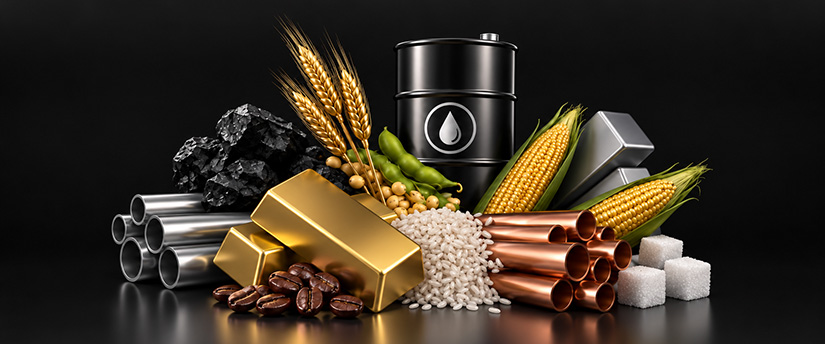
If you have spent time exploring the financial markets, you have probably encountered terms such as gold, crude oil, natural gas, wheat, or coffee. These are all part of a market that connects financial trading with the real economy. But what are commodities, exactly, and why do traders pay so much attention to them?
Commodities are basic raw materials or primary agricultural products that can be bought and sold. Unlike a company share, which represents ownership in a business, a commodity represents a physical good or exposure to its market price. Commodities markets include everything from energy and precious metals to agricultural products and livestock.
For forex traders, understanding commodities can also be useful because commodity prices can influence currencies, inflation expectations, interest rates, and global economic sentiment. Below, we will explore how commodity markets work, the major types of commodities, what moves their prices, and how traders can approach them responsibly.
What Are Commodities?
So, what are commodities in simple terms? First of all, it is crucial to note that a commodity is a standardized raw material or primary product that can be traded. Examples include gold, silver, crude oil, natural gas, wheat, corn, soybeans, coffee, and livestock.
The important word here is standardized. A barrel of a particular crude oil benchmark or a specified quantity of gold can be priced and traded according to established market specifications. This makes commodities suitable for organized markets and derivative contracts.
Commodity trading has existed in various forms for centuries because producers and buyers need ways to manage uncertain prices. Today, commodity markets have developed into sophisticated global financial markets where producers, businesses, institutions, investors, and traders participate for different reasons.
Commodity futures are one of the most important instruments used in these markets. A futures contract is an agreement involving a specified quantity of an underlying commodity or financial instrument at a predetermined price and future date.
The Main Types of Commodities
Now that we have answered the basic question of what are commodities, it is useful to divide them into several major categories.
1. Energy Commodities
Energy is one of the most closely watched areas of the commodity market.
Major examples include:
- Crude oil
- Natural gas
- Heating oil
- Gasoline
- Other refined energy products
Crude oil is particularly important because it is closely connected to transportation, manufacturing, petrochemicals, and global economic activity. Natural gas is similarly influenced by industrial consumption, electricity generation, weather, and regional supply conditions.
Energy prices can react rapidly to geopolitical developments, production disruptions, changes in inventories, and shifts in global demand.
2. Precious Metals
Precious металлы include:
- Золото
- Серебро
- Платина
- Palladium
Gold is arguably the most familiar commodity among retail traders. It is often monitored during periods of economic uncertainty and can respond to changes in interest-rate expectations, inflation expectations, the US dollar, and investor demand.
For forex traders, gold is especially interesting because it is commonly quoted in US dollars. This creates an important relationship between the precious-metal market and the currency market.
3. Agricultural Commodities
Agricultural commodities include products such as:
- Wheat
- Corn
- Soybeans
- Coffee
- Sugar
- Cocoa
- Cotton
Agricultural markets have a distinctive characteristic: weather matters enormously.
A drought, flood, frost, or unusually favorable growing season can affect expected production and therefore prices. Planting decisions, crop conditions, inventories, transportation costs, and international trade policies can also influence agricultural markets.
CME Group, for example, categorizes agricultural products alongside energy and metals within its major commodity market offerings.
4. Livestock
Livestock markets include products such as cattle and other animal-based agricultural commodities.
Prices can be influenced by feed costs, consumer demand, disease concerns, herd sizes, weather, and broader agricultural conditions.
Although livestock may receive less attention from retail traders than gold or oil, they are an important component of the broader commodity ecosystem.
What Moves Commodity Prices?
One of the most important lessons for anyone learning what are commodities is that their prices are heavily influenced by supply and demand.
Imagine that global oil production suddenly falls while demand remains unchanged. Buyers are competing for a smaller supply, potentially putting upward pressure on prices.
The reverse can happen when production increases faster than consumption.
However, commodity pricing is rarely that simple. Several factors can interact at the same time.
Supply and Demand
Supply disruptions are among the most obvious commodity catalysts. Production cuts, mine closures, transportation problems, poor harvests, or unexpected geopolitical events can reduce available supply.
Demand can change because of economic growth, consumer behavior, industrial activity, technological developments, or seasonal patterns.
Weather
Weather is particularly important for agricultural commodities and can also influence energy markets.
For example, extreme temperatures can increase demand for heating or cooling, while droughts can damage crops and affect agricultural supply expectations.
Geopolitical Events
Commodity markets are closely connected to international politics.
Conflicts, sanctions, trade restrictions, shipping disruptions, and changes in relations between major producing or consuming countries can create sudden price movements.
This is particularly relevant for energy commodities because oil and gas production and transportation are concentrated in important geographical regions.
The US Dollar
The relationship between commodities and the US dollar is another important concept for forex traders.
Many major commodities are priced internationally in US dollars. When the dollar changes in value, the effective purchasing cost of a commodity can change for buyers using other currencies.
CME research notes that many commodities are quoted in USD and discusses the historical relationship between the dollar and broad commodity indexes.
This does not mean commodities will automatically rise whenever the dollar falls. Markets are more complicated than a single inverse relationship. Instead, the dollar should be considered one factor among several.
How Are Commodities Traded?
A common misconception is that commodity trading always means physically buying barrels of oil, bags of coffee, or gold bars.
In financial markets, traders can gain exposure to commodities through different instruments.
Futures Contracts
Futures are standardized contracts traded through organized derivatives markets. They specify factors such as contract size and expiration. Their markets also allow commercial participants to hedge price risk and allow traders to speculate on price movements.
Options
Commodity options provide another way to obtain market exposure or manage risk. Depending on the contract, an option gives the buyer the right, but not the obligation, to buy or sell an underlying asset or futures contract at specified terms.
Options can be more complex than straightforward buying or selling, so beginners should understand concepts such as premium, strike price, expiration, and implied volatility before using them.
CFDs and Other Broker Products
Some retail brokers offer commodity exposure through contracts for difference (CFDs) or similar products. In this case, the trader generally speculates on the price movement without taking ownership of the physical commodity.
The exact product structure, leverage, costs, overnight financing, margin requirements, and regulatory protections depend on the broker and jurisdiction.
Commodities and Forex: Why Should Currency Traders Care?
If your primary interest is forex, learning what are commodities can provide another perspective on the global economy.
Certain currencies are sometimes described as being sensitive to commodity prices because their economies have significant exposure to commodity production or exports. For example, changes in energy or raw-material prices can influence a country’s trade balance, export revenues, inflation, and economic expectations.
Commodity prices can also affect central-bank expectations.
Suppose energy prices rise substantially. Higher energy costs can contribute to inflationary pressure. Traders may then reassess expectations for monetary policy, which can influence bond yields and currencies.
This creates a chain that can look something like:
Commodity prices → inflation expectations → interest-rate expectations → currency valuations
It is not a guaranteed sequence, but it demonstrates why commodity markets can matter to forex analysis.
Commodity Trading vs. Forex Trading
There are similarities between commodity and торговля на рынке Форекс, but they are not identical.
Форекс primarily involves currencies and their relative values, such as EUR/USD or GBP/USD. Commodity markets instead focus on raw materials and primary products.
Their price drivers can also differ.
Currency markets are heavily influenced by monetary policy, interest rates, economic data, political developments, and capital flows. Commodities can be particularly sensitive to physical supply constraints, inventories, production levels, weather, and transportation.
That difference can be useful. Traders who understand both markets can develop a broader view of global economic conditions rather than analyzing individual charts in isolation.
What Should Beginners Watch Before Trading Commodities?
Understanding what are commodities is only the beginning. Before placing a trade, beginners should learn what specifically drives the commodity they want to trade.
For oil, this could include production, inventories, refinery demand, transportation, and geopolitical developments.
For gold, traders may monitor interest rates, the US dollar, inflation expectations, and risk sentiment.
For agricultural commodities, weather forecasts, crop reports, planting conditions, and seasonal patterns can become particularly important.
Technical analysis can complement fundamental research. Traders may use support and resistance, trend analysis, moving averages, momentum indicators, and chart patterns to identify potential setups.
However, technical signals do not eliminate risk. Commodity prices can move sharply following unexpected news, and leveraged products can magnify both gains and losses.
Risk Management Is Essential
Commodity markets can offer opportunities, but they can also be highly volatile.
A sound trading plan should define:
- How much capital is at risk on each trade
- Where the trade becomes invalid
- Whether leverage is appropriate
- How position size is calculated
- What market conditions justify entering or exiting
- How major economic or commodity-specific events could affect the position
A stop-loss can help limit losses, although it cannot guarantee a particular execution price during extreme market conditions or market gaps.
It is also important to understand the product offered by your broker. Futures, CFDs, options, ETFs, and other commodity-related instruments have different structures and risks.
Final Thoughts: What Are Commodities and Why Do They Matter?
So, what are commodities?
They are standardized raw materials and primary products that form an essential part of the global economy and financial markets. Energy, metals, agriculture, and livestock are among the major commodity categories, with prices shaped by supply, demand, weather, geopolitics, economic growth, currencies, and investor expectations.
For forex traders, commodities are worth studying because financial markets are interconnected. Oil can influence inflation and energy-sensitive economies. Gold can respond to changing interest-rate and risk expectations. Agricultural prices can reflect weather and supply conditions. Meanwhile, the US dollar plays an important role in the pricing of many internationally traded commodities.
The goal is not to memorize every commodity or predict every price move. A better approach is to understand why a market moves, identify the factors that matter most for a particular commodity, and combine fundamental awareness with disciplined technical analysis and risk management.
Once you understand that framework, commodities become more than just another group of assets on a trading platform—they become a useful window into how the global economy actually works.