KO
KO  EN
EN  FR
FR  ES
ES  PT
PT  ZH
ZH  AR
AR  FA
FA  RU
RU  NL
NL  MS
MS  VI
VI  PH
PH  TH
TH  ID
ID 

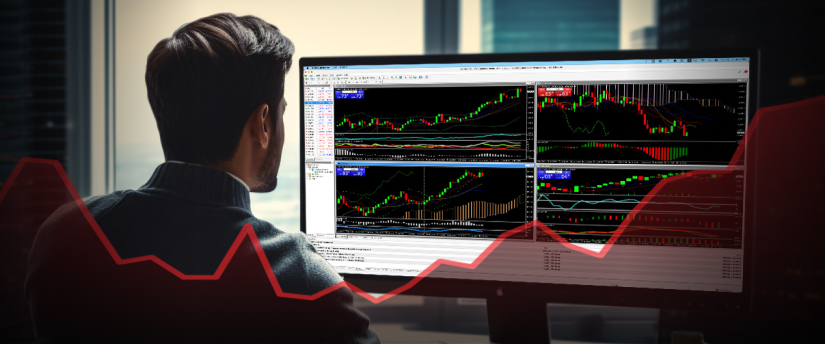
The fundamentals of trading psychology play a crucial role in long-term trading success. Trading goes beyond statistics, indicators, or strategies alone. On a personal level, even the strongest system fails if a trader cannot stay calm and disciplined during execution. At the market level, price movements often reflect excitement and panic rather than clear economic justification.
Few forex traders succeed consistently without understanding how emotions influence their decisions. In fact, psychological challenges remain one of the most common obstacles traders face, even when they do not fully recognise them.
For this reason, developing a strong grasp of the fundamentals of trading psychology is essential for anyone seeking consistency, longevity, and a results-driven trading experience.
In this article, we explore the fundamentals of trading psychology, examining how emotions affect individual traders and market behavior, and how disciplined routines and mindset control can lead to healthier and more sustainable trading outcomes.
Understanding primary driving emotions in trading psychology
No trading psychology discussion can start without mentioning greed and fear.
These two emotions sit at the core of the fundamentals of trading psychology, and letting them run unchecked is a recipe for disaster.
Greed causes traders to stay in positions longer than they should or to enter reckless trades. In simple terms, it reflects the desire to maximise profits without properly considering the risk of losses 또는 missed opportunities.
Fear represents the opposite force within trading psychology. It pushes traders to exit positions too early or hesitate before entering trades, especially after experiencing a significant market loss.
The challenge with these emotions is that traders often fail to recognise them. For example, fear can appear as patience or healthy caution, leading traders to wait endlessly for the perfect opportunity. By contrast, greed often disguises itself as optimisation, where traders believe they are simply maximising every situation.
In practice, distinguishing between these emotions can be difficult. A degree of fear often appears when closing a position, just as greed can influence the decision to let it run. The goal of the fundamentals of trading psychology is not to eliminate emotions, but to recognize and control them.

Building a trading plan as a psychological anchor
To manage emotions effectively, traders need a solid trading plan. This plan acts as a psychological anchor and forms a core pillar of the fundamentals of trading psychology, helping traders measure whether they are deviating from their intended approach.
Most importantly, a trading plan must include clear entry rules. These should cover setups, confirmations, market conditions, and price points. It should also define exit rules, such as risk-reward ratios, fixed stop-losses, and time-based exits.
In addition, strong risk management measures are essential to trading psychology. These include maximum risk per trade or period and proper position sizing, all of which help limit emotional decision-making.
A trading plan also allows traders to create a clear checklist to follow. When traders deviate from that checklist, emotions often drive their decisions, signalling the need to reassess. Strong risk management further reduces fear by introducing automatic safeguards that limit losses and weaken its main trigger.
Losses and emotional control in trading psychology
Losses are a natural part of trading and play a major role in shaping trading psychology. They often trigger strong emotional reactions, pushing traders to recover quickly with a large win. This behaviour, known as revenge trading, frequently leads to losses stacking on top of one another.
Even the most successful traders do not win every trade. Accepting losses as part of the fundamentals of trading psychology is essential, as every trade carries some level of risk.
However, accepting losses does not mean ignoring them. Smart risk management helps control how much traders can lose, reducing emotional impact when markets move against them. Beyond that, responses vary.
Some traders benefit from stepping away after a losing streak, while others improve by reviewing their strategy and continuing with discipline.
What matters most is consistency. When losses occur, traders should avoid abandoning their strategy in an attempt to recover quickly.
Temporary mental states and daily trading performance
Another important aspect of the fundamentals of trading psychology involves day-to-day mental states. Fatigue, stress, anger, or distraction can significantly impair trading performance.
While traders cannot always control these emotional fluctuations, they can control their routines and trading schedules. For example, traders with demanding day jobs may find it unproductive to trade immediately after work, when stress and fatigue are highest.
Unexpected personal news can also affect decision-making during a trading session. Depending on the situation, stepping away or allowing existing positions to run may be the healthier choice.
It is important to remember that the trades you avoid are just as valuable as the trades you take. Markets will always present new opportunities, and avoiding poor decisions often contributes more to long-term success than forcing participation.
Maintaining focus in modern trading environments
Focus is another key pillar of trading psychology. In an environment overloaded with information, maintaining clarity can be challenging. Constant notifications, conflicting news, and emotionally charged content can undermine disciplined decision-making.
Traders struggling with focus may benefit from practical adjustments:
Consider the following if you have trouble focusing:
- Avoid or block trading content that prioritises excitement over realism
- Gather market information from specialised trading sources rather than general news
- Limit notifications during trading sessions
- Close non-trading applications while trading
These habits support the fundamentals of trading psychology by reducing external emotional noise.
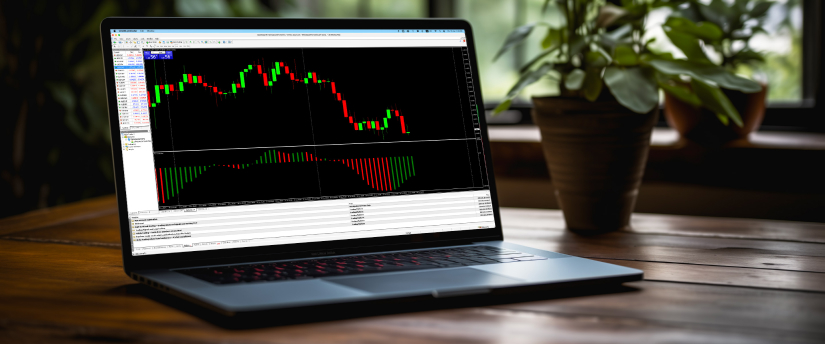
Understanding market psychology and crowd behaviour
Market psychology refers to the collective emotions and expectations of market participants. Prices move not only due to technical or fundamental factors, but also because traders respond to optimism, fear, uncertainty, and confidence.
In many cases, understanding typical market reactions provides more insight than analysing forex raw data. For example, during geopolitical tension, traders may rush toward perceived safe havens, even when underlying value remains unchanged.
Crowd behaviour reinforces these reactions. As traders anticipate how others will respond, momentum builds and often results in sharp price movements.
Anticipating crowd behaviour is an advanced application of the fundamentals of trading psychology. By remaining level-headed while others react emotionally, traders can identify opportunities in volatile conditions where many participants struggle.
Mastering trading psychology is not an overnight process. It involves continuous self-awareness and discipline. While setbacks are inevitable, traders who commit to the fundamentals of trading psychology often achieve calmer, more focused, and more structured trading sessions over time.
DISCLAIMER: This information is not considered as investment advice or an investment recommendation, but is instead a marketing communication.


 JA
JA